


Walmart Just Expanded Their Empire - But Not In The Retail Industry
- Rohan Modi

- Dec 3, 2024
- 2 min read
Updated: Jan 8, 2025
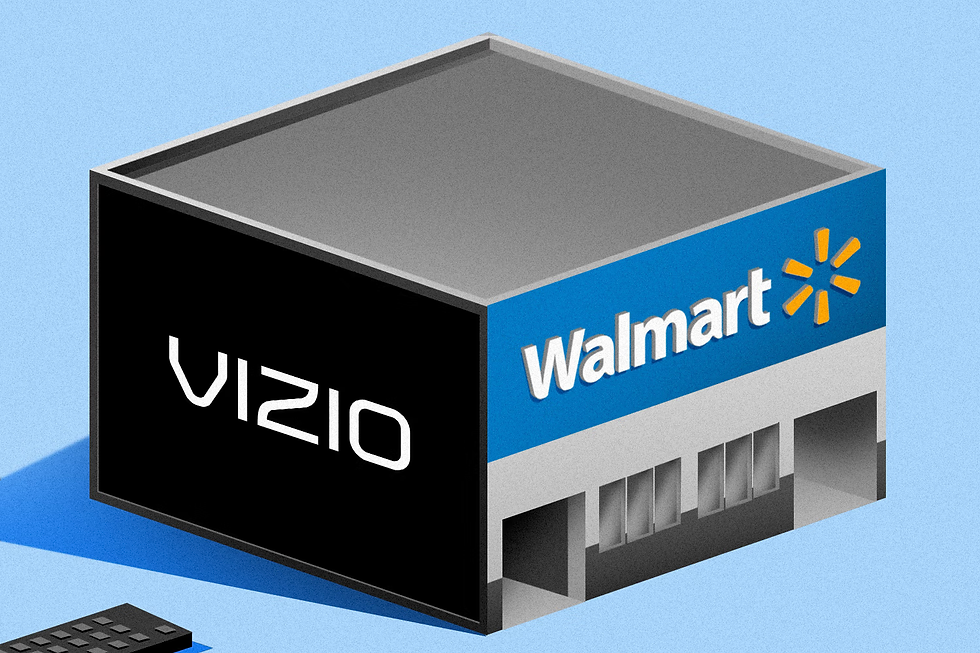
Walmart recently acquired the TV company Vizio in a deal that closed on Tuesday, December 3rd. Walmart purchased the company Vizio for $2.3 Billion (USD). This means big changes for Vizio, but it could also mean great benefits for Walmart. In this article, we'll discuss this deal, its meaning, and what could have led to this decision.
If you don't know, Vizio is a company that primarily designs and sells televisions. However, it's not just any old TV company. Vizio has a specialty - and it's not what you think. Vizio was first founded in October of the year 2002, and it started relatively small. Vizio's early success was due to selling TVs at a discount through retailers like Costco and Sam's Club. Over the years, they evolved and soon grew to be a giant in the industry of television. Currently, Vizio generates a revenue of $1.73 Billion (USD). In March 2016, Vizio released Vizio Platform+, their current main source of revenue. After it released Platform+, everything changed for the better. The secret behind Vizio's success isn't particularly detailed manufacturing, nor is it the quality of the TVs. It's because of the advertising revenue that they generate from Platform+. Ever since they changed to a completely ad-driven business model in 2021, their revenue has been increasing exponentially. Platform+'s gross profit margins are consistently above 60%. Why might have Walmart bought Vizio?
Walmart has, in fact, openly stated why it chose to acquire Vizio. Walmart has said that Vizio will "bolster its advertising business", as well as allow for more growth in the advertising field. Platform+ will account for most of Vizio's gross revenue. This, in addition to the fact that Vizio has had a successful history in the past, indicates that Walmart might have made a good choice. Additionally, since Vizio is an advertising business, they have access to a lot of data. This data would be incredibly useful for Walmart's own advertising business. The data would allow Walmart to get the right ads to the right people. This would, in turn, improve their sales, allowing Walmart to increase profits. Unfortunately, this deal could mean potential privacy risks. The agreement has sparked worries among privacy advocates, due to the large scale of personal data that both companies possess. The fact that Vizio has faced issues in the past regarding advertising and data tracking doesn't help their case. With all that advertising data, it could pose a huge risk to personal security. Nevertheless, Walmart and Vizio are going to continue to follow up on their agreement. As for now, they will remain working independently (even after Walmart has closed the deal). In their own words, even after the acquisition, Walmart and Vizio will keep functioning separately, "for the foreseeable future". CEO of Vizio, William Wang, will also remain in his position. Overall, Walmart's acquisition of Vizio represents a major advancement in the advertising and sales sector. While it may pose huge risks regarding privacy and data, time will tell whether this will be advantageous to consumers.


Comments