


SpaceX Launches 24 Satellites For Amazon Project
- Rohan Modi

- Jul 16, 2025
- 2 min read
Updated: Sep 5, 2025
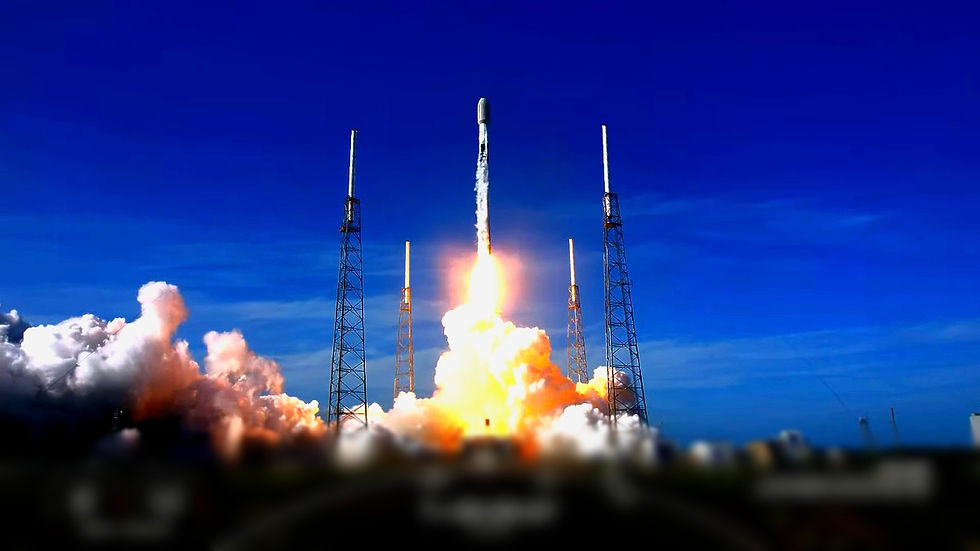
SpaceX launched 24 satellites for Amazon's project Kuiper earlier on Wednesday, July 16. This mission, called KF-01, bolstered their plan to provide global broadband. A SpaceX Falcon 9 rocket lifted off from Florida and later landed its very own reusable booster on an autonomous spaceport droneship ( also referred to as ASDS). This marks the third mission for Amazon's Kuiper, bringing the satellite count to exactly 78 (at the time of this article's publication)!
They're not finished just yet, however. Amazon's goal is to deploy over 3200 satellites into low-earth orbit (aka LEO). LEO is a zone that is quite ideal for fast communication with devices on Earth. This hefty mission reflects the growing push for satellite-based internet services, a field that is pretty much led by Kuiper and SpaceX's Starlink initiative, aiming to connect underserved areas worldwide. This mission marked the 50th Starlink launch to date. It is also the 13th mission for Falcon 9's stage booster. It tied a rocket reuse record that SpaceX set just one month ago, in June. Many think that every part of the Falcon 9 rocket is completely reusable. Contrary to that belief, it is not true. The Falcon 9 rocket is actually only reusable for the most part because the upper section of the rocket is disposable, and it cannot be reused on multiple flights. Nevertheless, SpaceX intends to solve this problem and make their rockets fully reusable (from top to bottom) with their next-gen space transport system, labeled Starship. This is still in the development process, but if everything works out, SpaceX will be the first to have created a successful rocket that can be fully reused.


Comments